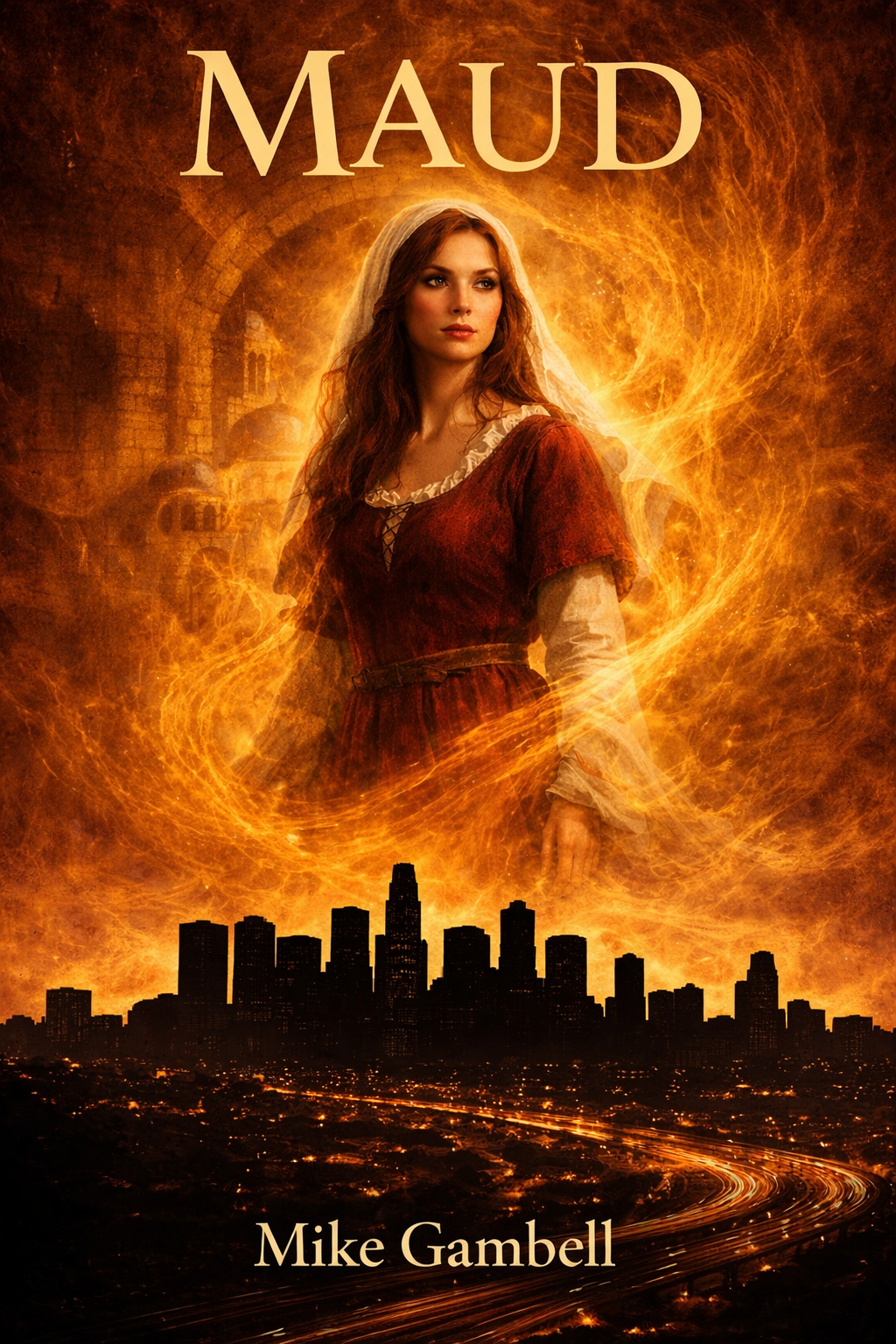
Maud
Published: June 1, 2026
Description
It is 1147. Maud is twenty years old, alone, and following an army south through
France toward the Crusades — not for God or glory, but because trade requires
customers and armies are reliably present. With a mule called Absalom and a cart of
practical goods, she has built a small reputation on honest dealing in a world of
people selling dreams. Maud is a novel about a woman who survives history by
refusing to be impressed by it: sharp, funny, and quietly furious about everything
that doesn't have to be as difficult as it is.
France toward the Crusades — not for God or glory, but because trade requires
customers and armies are reliably present. With a mule called Absalom and a cart of
practical goods, she has built a small reputation on honest dealing in a world of
people selling dreams. Maud is a novel about a woman who survives history by
refusing to be impressed by it: sharp, funny, and quietly furious about everything
that doesn't have to be as difficult as it is.
Back Cover
It is 1147. Maud is twenty years old, Irish, practical, and following the Second Crusade south through France — not for God or glory, but because armies need supplies and she has a cart and a mule called Absalom and no illusions about either.
She finds a lamp. She cleans it to sell it.
Nine centuries later, she is still there.
The rules of the lamp are as consistent as they are cruel: every wish granted, every consequence exact, every wisher arriving with perfect certainty and leaving with something they cannot return. Maud has watched it happen across three hundred iterations. She has a taxonomy. She has stopped being surprised. She has not stopped being furious.
James Sullivan is fresh out of a history degree, underemployed, and the first person in nine hundred years to rub the lamp and treat what comes out of it as a person.
He knows the folklore. He has thought, the way history students do, about what he would actually wish for. His answers are good ones. They are also, it turns out, entirely beside the point, because what James wants — what he actually wants — has nothing to do with wishes at all.
Maud has not been seen in nine centuries. It is a particular kind of thing, being seen.
*Maud* is a novel about a woman who survived history by refusing to be impressed by it, and one man who was wise enough to know the difference between a magical appliance and a person.
*"Sharp, funny, and quietly furious about everything
that doesn't have to be as difficult as it is."*
She finds a lamp. She cleans it to sell it.
Nine centuries later, she is still there.
The rules of the lamp are as consistent as they are cruel: every wish granted, every consequence exact, every wisher arriving with perfect certainty and leaving with something they cannot return. Maud has watched it happen across three hundred iterations. She has a taxonomy. She has stopped being surprised. She has not stopped being furious.
James Sullivan is fresh out of a history degree, underemployed, and the first person in nine hundred years to rub the lamp and treat what comes out of it as a person.
He knows the folklore. He has thought, the way history students do, about what he would actually wish for. His answers are good ones. They are also, it turns out, entirely beside the point, because what James wants — what he actually wants — has nothing to do with wishes at all.
Maud has not been seen in nine centuries. It is a particular kind of thing, being seen.
*Maud* is a novel about a woman who survived history by refusing to be impressed by it, and one man who was wise enough to know the difference between a magical appliance and a person.
*"Sharp, funny, and quietly furious about everything
that doesn't have to be as difficult as it is."*